League Play
How a Community Softball League Is Organised
See what sits behind a community adult softball league: a volunteer board, playing fields, rules, insurance, umpires and the policies players live by.
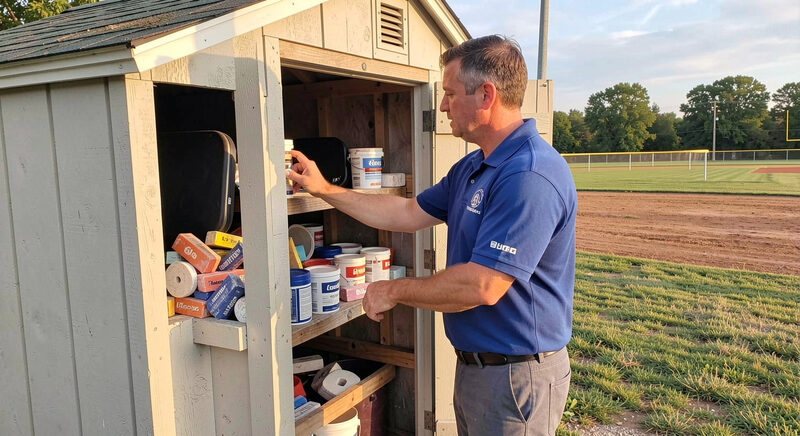
A community softball league looks simple from the dugout: a schedule, some umpires and a field. Behind the fence sits a small organization doing real work. Someone files the paperwork that keeps the league legal. Someone negotiates with the owner of the fields. Someone collects fees, pays umpires and buys balls. Someone writes the rules that decide how a protest is handled and whether a player may drink a beer in the parking lot.
Understanding that structure helps a player make sense of the notices, the policies and the occasional decision that seems to come out of nowhere. A league is not a company and not a government. It is a group of volunteers trying to keep a game alive for a few hundred people, and it runs on a handful of documents and a lot of goodwill.
Who Runs a Community League
Most leagues are governed by a volunteer board, sometimes called a board of directors, sometimes simply the people who have been doing it the longest. A typical board includes a president, a treasurer, a secretary and one or more directors who handle scheduling, fields or rules. They meet between seasons and often during them, and they make the decisions that keep the league moving.
The board is usually elected by the teams or the players, though in smaller leagues the positions pass from one willing volunteer to the next. A board member is almost never paid. That matters when a player gets frustrated with a call or a policy, because the person on the other side of the complaint is giving up their evenings for the same love of the game. Knowing who sits on the board, and how to reach them, is the first practical step for any player who wants something changed.
Why the Fields Are the Hardest Part
Fields decide everything about a league. A league with four good fields can run more teams, more nights and longer seasons than a league with one. Fields are rarely owned by the league itself. They usually belong to a city, a school district, a water district or a private owner, and the league rents or borrows them under an agreement that spells out who maintains what.
That agreement is why so many league rules exist. If the field owner bans alcohol, the league bans alcohol. If the owner requires the league to line and drag the infield after every game, a work party appears on the calendar. If the lights belong to the owner and cost money to run, the league passes that cost into the team fee. A player who understands that the fields are borrowed will understand why the policies are strict and why the work parties matter.
What Do League Rules Actually Cover
Every league adopts a national rulebook, usually the USA Softball or USSSA rules, and then adds local variations. Those variations are where the real game lives. A league might limit home runs, use a one-pitch or a modified strike zone, set a time limit on games, or apply a mercy rule when one team leads by a wide margin. It might require a minimum number of women in a co-ed batting order, or ban metal cleats for safety.
Local rules also cover conduct. Most leagues have a no-tolerance policy for abuse of umpires, a policy on ejections and suspensions, and a process for protests. A player who reads the rulebook once at the start of the season will spend far less time arguing and far more time playing. The rules are not there to spoil the evening. They are there so that a weeknight game ends in time for everyone to get home.
How Does Insurance Shape the League
Insurance is the invisible force behind many league policies. Adult sports carry real liability, and a league must protect itself against injury claims and property damage. That is why leagues require players to sign a waiver, why some ban alcohol at the fields, why metal cleats are often prohibited, and why a player who brings a dog or a glass bottle may be asked to leave.
The cost of insurance is part of the team fee, and it is one of the reasons fees rise over time. A league that seems strict about safety is usually responding to the terms of its policy, not to a desire to spoil the fun. Understanding that connection turns a list of rules into a set of practical protections for everyone on the field.
What Does a Mailing Address and Contact Tell You
A league keeps a mailing address, often a post office box, for official business: registrations, payments, correspondence and legal notices. It also keeps a phone number or an email for players with questions. These details appear on the information page precisely so that a player does not have to guess whom to contact about a fee, a protest or a lost item.
Respecting that channel keeps the league organized. A question sent to the right person gets answered. A question shouted across the parking lot gets forgotten. The page on league news and the season rhythm explains the notices that a league sends through those channels, and the guide on how adult softball leagues work explains the season those notices describe.
How Do You Raise a Question Without Starting a Fight
Leagues run on volunteers, and volunteers respond to calm, specific questions far better than to complaints. If a rule seems unfair, ask why it exists. If a field is in poor shape, offer to help fix it. If a call was missed, ask the umpire politely after the inning rather than during it. The goal is to solve a problem, not to win an argument.
A player who becomes known as reasonable gains influence. A player who becomes known as difficult gets ignored, and may eventually be asked to leave. In a small community league, reputation travels faster than any official channel, and it is built one interaction at a time.
Where to Start
Start by reading the league information page once, from top to bottom, before the season begins. Note the board members, the field policies and the local rule variations. Then keep the contact details handy. A player who understands how the league is organized spends less time confused and more time playing, and is better placed to help the league when it needs a hand.
A league runs on more than a schedule. The volunteer board handles registration, umpire pay and field permits, the fields themselves are usually borrowed from a school district or a city parks department, and the insurance policy and the local rules decide what a ground crew may and may not do. When a season ends, the same questions return: who holds the keys, who signs the permit, and what it takes to shut a diamond down. The guide to closing a public ground for play follows that thread from the first gate to the last, and it is a useful companion for anyone who has ever stood on a borrowed infield at dusk.