League Play
How to Read Softball Standings
Understand wins, losses, ties, run differential and head-to-head rules so a league table actually tells you where a team stands late in the season.
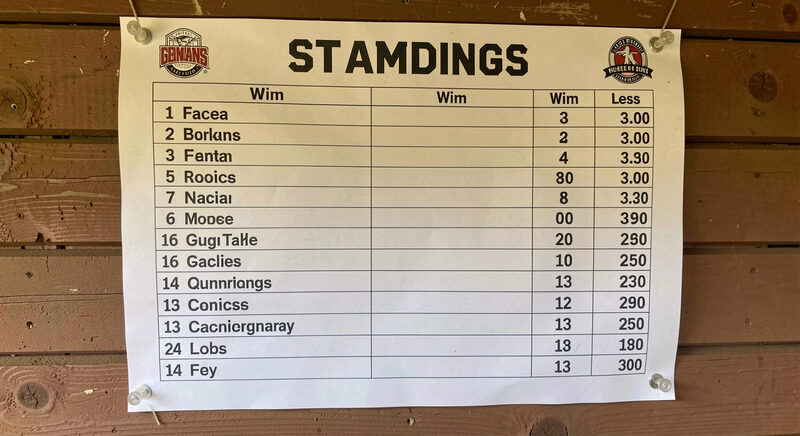
A league table looks like a simple list of wins and losses until the final week, when every column suddenly matters. Two teams with the same record may be separated by a tiebreaker that nobody noticed in April. A team that seemed safely in the playoffs can slide out on a run-differential rule. Reading the standings properly is part of following a season, and it is easier than it looks.
The table is a summary of everything that has happened so far, and it is designed to answer one question: who is in front. The details behind that answer, from the win-loss record to the tiebreakers, decide who plays in the postseason and who goes home early.
What Do the Columns Mean
A standard standings table lists each team with its wins, its losses and sometimes its ties. From those numbers it calculates a winning percentage, usually written as a decimal like .667, which simply means the team has won two of every three games. Some tables also show games behind, which measures how far a team trails the leader, and a run differential column, which tracks how many more runs a team has scored than allowed.
The winning percentage is the number that matters most, because it compares teams that have played a different number of games. A team at 7 and 3 has a better percentage than a team at 6 and 3, even though it has one more loss. Reading the percentage rather than the raw wins is the first habit of a player who follows the table closely.
How Do Ties and Cancelled Games Count
Adult softball handles ties in a few ways. Some leagues allow a game to end in a tie, especially when a time limit is reached. Others play extra innings or use a tiebreaker such as starting an inning with a runner on second. The rulebook for each league states which approach it uses, and the standings reflect it.
Cancelled games complicate the table further. A game lost to rain may be rescheduled, in which case it eventually counts, or it may be cancelled, in which case it does not. A league that cancels games may adjust the final table by winning percentage rather than by total wins, precisely because teams have played a different number of games. The notes on how a season schedule is built explain why weather forces those decisions.
What Are Tiebreakers and Why Do They Exist
When two teams finish with the same record, the league needs a rule to decide who ranks higher. The most common first tiebreaker is the head-to-head record, which compares how the two teams did against each other during the season. If they split their games, the league moves to the next tiebreaker, often the run differential or the number of runs scored against common opponents.
Tiebreakers feel arbitrary until a team loses a playoff spot because of one. The fair approach is to publish the tiebreaker order before the season begins, so no team is surprised in the final week. A captain who knows the order can make strategic decisions late in the season, such as protecting a lead to improve run differential, that a captain who ignores the rules cannot.
How Does Run Differential Work
Run differential is the total number of runs a team has scored minus the total it has allowed. A team that wins by large margins and loses narrowly will have a positive differential even if its record is average, while a team that wins narrowly and loses badly will have a negative one. Leagues use it as a tiebreaker because it rewards dominance in a way that a simple win-loss record does not.
The catch is that run differential can reward running up the score. For that reason, many leagues cap the margin that counts toward the differential, often at a set number of runs per game. A team that wins by twenty may only be credited with a differential of ten. The cap keeps the standings fair and discourages the kind of lopsided play that spoils a recreational league.
How Do You Follow the Table Through a Season
Early in the season, the table means little, because every team has played only a few games and one result can move a team several places. By mid-season, the table starts to show which teams are contenders and which are playing for pride. In the final weeks, every game matters, and the table becomes the most-read document in the league.
The smart approach is to check the table after each week, not just at the end. A team that tracks its position and its tiebreakers can adjust its approach as the season goes. The guide on how adult softball leagues work explains how the season is structured, and the guide on how softball tournaments work explains what happens once the top teams qualify.
Why the Standings Rarely Tell the Whole Story
A table cannot capture a team that is improving every week, or one that is falling apart, or one that has lost its best player to an injury. It cannot show the team with a deep roster that wins the games that matter, or the team with a strong record built against weaker opponents. The standings are a snapshot, not a verdict.
That is why the playoffs exist. A table rewards consistency over a season, but a bracket rewards the team that plays well on a given weekend. A team that limps into the postseason can still win it, and a team that dominated the regular season can still lose in the first round. The table sets the stage, and the games decide the ending.
Where to Start
Start by finding your league's tiebreaker order and reading it once. Then check the table after each week and track your team's position and its run differential. When the final week arrives, you will already know what your team needs to do. The standings are a tool, and a player who understands the tool gets more out of a season.
Standings pages reduce a season to wins, losses and run differential, then hand the tight cases to head-to-head tiebreakers. That order matters: two teams can finish level on record and still be separated by a single result from June. The same logic runs through other competitions, where a bracket, a cut or a points system quietly decides who advances and who goes home. Viewers who follow that question past the box score can look at how a format decides a winner, a guide to obstacle-course television, its builds, formats and preparation. The tiebreaker column and the obstacle course share one idea: the rules decide the outcome before anyone plays.